
English| USD
Suggested for you
More currencies
Choose a language
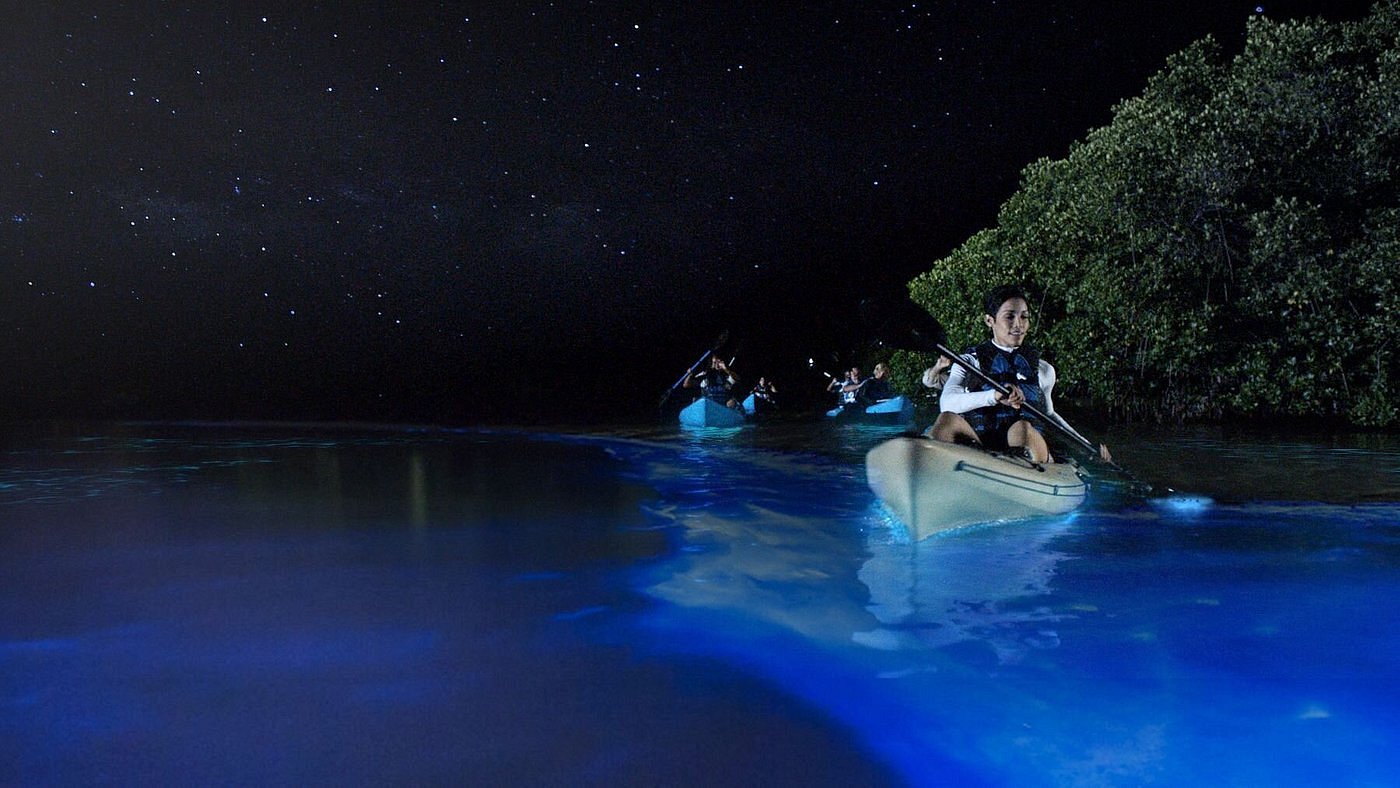
The intensity of the bioluminescent display in Puerto Mosquito depends entirely on lunar cycles and sky darkness. Timing your visit to the darkest nights transforms a faint shimmer into a blazing underwater constellation. This guide walks through the moon phases, seasonal rain patterns, and arrival windows that maximize dinoflagellate visibility.
Quick answer
The best time to visit the bioluminescent bay is during the new moon phase, when skies are darkest and dinoflagellate organisms produce their brightest glow. Aim for the three nights surrounding the new moon, between 18:00 and 23:59, when celestial light pollution is minimal. Avoid full moon periods entirely—ambient moonlight washes out the bioluminescence and reduces visibility by up to seventy percent.
Puerto Mosquito holds the highest concentration of bioluminescent dinoflagellates anywhere on Earth—roughly 720,000 organisms per gallon under optimal conditions. That density turns every paddle stroke into a streak of blue-green light, but only when the sky cooperates. The moon governs visibility more than any other factor. During a new moon, the bay erupts with radiance; under a full moon, the same water appears nearly dormant. The lunar cycle repeats every 29.5 days, and your booking window should track it accordingly. Peak darkness occurs three nights before and three nights after the new moon, offering a six-night window each month when the bioluminescent bay is at its most vivid. Tours operate nightly from 18:00 to midnight, but the darkest hours—between 20:00 and 23:00—deliver the sharpest contrast. Cloudy skies amplify the effect by blocking residual starlight, so overcast evenings can rival even the blackest new moon nights. Seasonal rain patterns shape the second variable. Summer and early autumn bring warm Caribbean storms that temporarily dilute the bay's salinity and reduce organism concentration. The dry season, spanning December through April, stabilizes water chemistry and sustains higher dinoflagellate counts. Winter months also align with calmer trade winds, making kayak navigation easier for first-time paddlers. That convergence of dark skies, stable salinity, and manageable currents explains why January through March consistently ranks as the ideal bioluminescent bay best time to go. Temperature remains constant year-round—water hovers near 80°F and air temperatures rarely dip below 75°F—so thermal comfort is never a limiting factor. What changes is the interplay of moon phase, cloud cover, and precipitation. A new moon visit in February offers the highest probability of encountering conditions where every motion ignites a cascade of light, where fish leave glowing trails and jellyfish pulse like submerged lanterns. Timing the visit to align these variables turns a scheduled tour into a encounter with one of the planet's rarest natural phenomena.
“Peak darkness occurs three nights before and three nights after the new moon, offering a six-night window each month when the bay is at its most vivid.”
The optimal time to visit is during the new moon phase, as the lack of moonlight provides the necessary darkness to observe the dinoflagellates clearly. While the bay remains accessible year-round, prioritizing these dark-sky periods is essential for visibility.
Year-round, stable tropical temperatures
This phase offers the lowest ambient light and highest visibility for the bioluminescence.
Year-round, stable tropical temperatures
Increased ambient light from the moon significantly reduces the visibility of the glow.
Warm, humid with frequent short rain
Visibility remains consistent, though travel plans should account for tropical weather patterns.
Mild, pleasant with lower humidity
Cooler, dry air often results in clear skies, making this a popular time for night excursions.
Verdict: The best opportunity for visibility occurs during the three to five days surrounding the new moon, regardless of the season.
The bioluminescent bay maintains consistent operating hours throughout the week to facilitate nighttime tours. Visitors can access the site daily during the evening and late-night windows.
A successful bioluminescent bay visit depends on advance reservations and the right equipment for low-light conditions.
Everything you need to know about bioluminescent bay best time to go
The bioluminescent bay best time to go is during the darkest nights of the month, specifically near the new moon phase. This lack of moonlight allows the dinoflagellate glow to appear much brighter against the water.
Lunar phases are critical because high moonlight intensity reduces the visibility of the natural plankton illumination. We recommend checking the lunar calendar to align your trip with the darkest possible nights for optimal viewing.
Regarding the bioluminescent bay best time to go, the site is open for tours between 18:00 and 23:59. Arriving during this window ensures you are present when the sky is sufficiently dark for the organisms to be seen clearly.
While the bay operates year-round, environmental conditions such as rain or tide levels can occasionally fluctuate. Planning your trip during drier months often provides more stable conditions, which is helpful when determining the bioluminescent bay best time to go.
Access to the bay requires a booked tour, with prices starting from 65 USD per person. There is no standalone entrance fee for the site itself, as all visitors must be part of an authorized excursion.
The bay is open seven days a week from 18:00 to 00:00. This schedule accommodates the necessity for total darkness to observe the natural phenomenon effectively.
No, access is restricted to authorized tours which handle the logistics of entering the protected area of Puerto Mosquito. You cannot enter the bay independently, so all visits must be arranged through a licensed tour operator.
Families should prioritize booking early to secure spots during the new moon cycle when the glow is most intense. Ensure children are comfortable with night excursions and always confirm details with your tour provider before heading to the address at Puerto Mosquito.